
Google Ads for Local Businesses: A Step-by-Step PPC Strategy for Generating High-Intent Leads
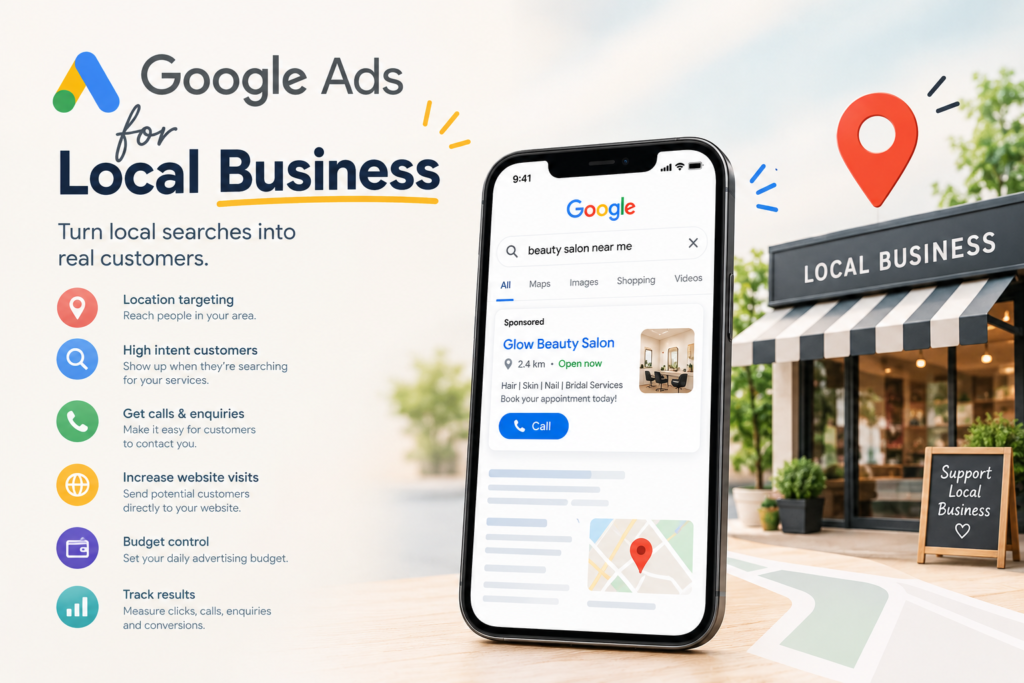
1. Why Google Ads can be powerful for local businesses Explain the difference between: Social advertising and Search advertising With social advertising, businesses can interrupt someone’s browsing experience with an advertisement. With search advertising, businesses can potentially appear when someone is actively searching for a relevant product or service. 2. Understanding search intent Introduce: Then explain why high-intent keywords are particularly valuable for lead generation. 3. Keyword research for Google Ads Explain: Example: Instead of: “SEO” A local company could target: “SEO services in Kochi” or: “SEO agency for small business” 4. Negative keywords This is an important topic that many beginner articles don’t explain properly. Explain that businesses don’t only need to choose keywords they want to target. They also need to identify searches they don’t want their ads to appear for. For example, a paid course provider may not want to pay for clicks from people searching for: “free digital marketing course” This helps reduce wasted ad spend. 5. Creating Google Search Ads Explain how to create compelling: Example: Headline:“Digital Marketing Course in Kochi” Description:“Learn SEO, Meta Ads & Google Ads with practical training. Enquire today.” 6. Location targeting Explain how local businesses can target specific: You can make this particularly relevant to businesses serving specific areas. 7. Landing pages A Google Ad should not simply send everyone to the homepage. Explain what a good landing page should contain: Most importantly: The landing page should match the promise made in the advertisement. 8. Google Ads budget management Explain: Also explain why the highest number of clicks isn’t necessarily the goal. The goal is usually profitable conversions/leads. 9. Conversion tracking Explain why businesses need to track actions such as: Without conversion tracking, it’s difficult to know whether advertising is actually producing business results. 10. Optimizing Google Ads campaigns Discuss: 🔑 Primary SEO keyword Google Ads for local businesses Secondary keywords 🔥 How these three blogs work together You can make your website’s blog section look much more strategic: Blog Main Service Main Goal SEO for Small Businesses SEO Get found organically Meta Ads for Lead Generation Meta Ads Reach & generate leads Google Ads for Local Businesses Google Ads Capture high-intent searches So the overall marketing funnel becomes: SEO → Organic Visibility↓Meta Ads → Audience & Lead Generation↓Google Ads → High-Intent Traffic↓Landing Page → Conversion↓Lead / Customer
Meta Ads for Lead Generation: How Facebook and Instagram Advertising Can Turn Audiences into Customers
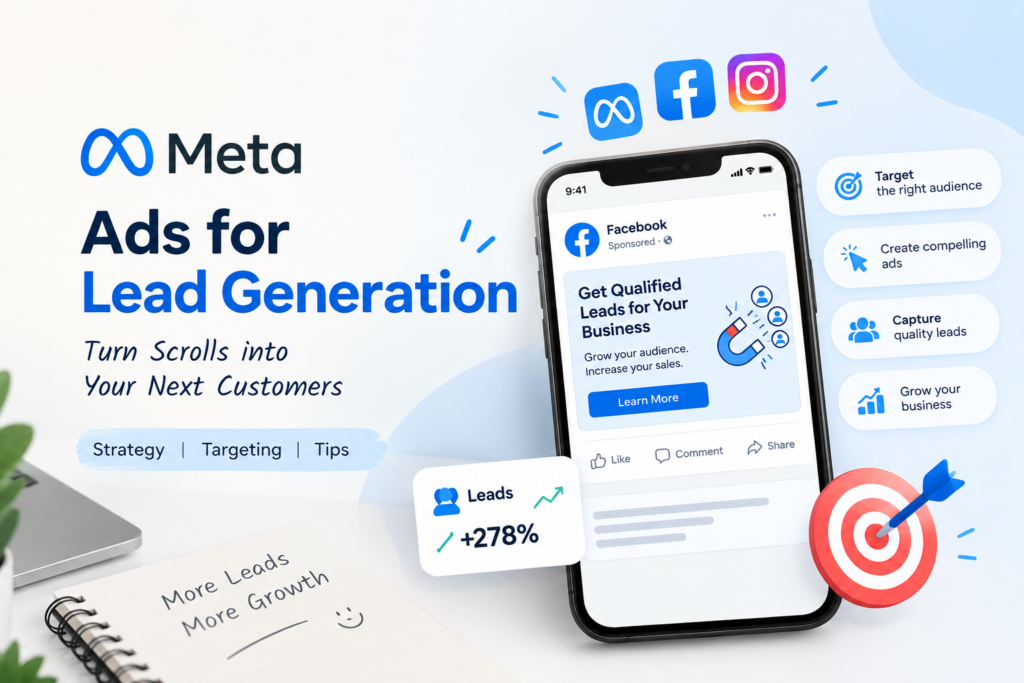
What the blog can explain 1. What makes Meta Ads different from organic social media Explain the difference between: Organic social media and Paid advertising A business can post content organically, but Meta Ads allow businesses to intentionally reach specific audiences based on different targeting signals. 2. Defining the ideal customer Before creating an advertisement, businesses need to understand: Introduce the concept of an ideal customer profile. Example: A digital marketing course may target college students, job seekers, freelancers and small business owners rather than advertising to everyone. 3. Choosing the right Meta Ads campaign objective Explain why choosing the correct objective matters. Depending on the business goal, campaigns may focus on: Then explain why a business shouldn’t simply choose an objective because it sounds attractive. 4. Audience targeting This can be a detailed section. Explain: Also explain the difference between cold audiences and warm audiences. 5. Creating high-converting ad creatives Explain the relationship between: Visual + Hook + Message + CTA For example: Hook:“Still struggling to get customers from Instagram?” Value:“Learn how targeted Meta Ads can help you reach people actively interested in your service.” CTA:“Get Started” Discuss: 6. Writing effective Meta Ad copy Explain the basic structure: Problem → Solution → Benefit → Proof → CTA Also discuss: 7. Lead forms vs landing pages This is an excellent SEO section because it makes the article more specific. Compare: Instant Forms vs Website Landing Pages Explain the advantages and disadvantages of both. For example: Instant forms may reduce friction, while landing pages can provide more information before the user submits their details. 8. Retargeting Explain how businesses can advertise again to people who have already interacted with them. Examples: This introduces the concept of warm audiences. 9. Understanding Meta Ads metrics Explain: CTR — Click-through rateCPC — Cost per clickCPL — Cost per leadCPM — Cost per 1,000 impressionsConversion rate Most importantly, explain why cheap leads aren’t always good leads. 10. Testing and optimization Discuss: 🔑 Primary SEO keyword Meta Ads lead generation Secondary keywords
SEO for Small Businesses: A Complete Guide to Improving Google Rankings and Attracting Local Customers
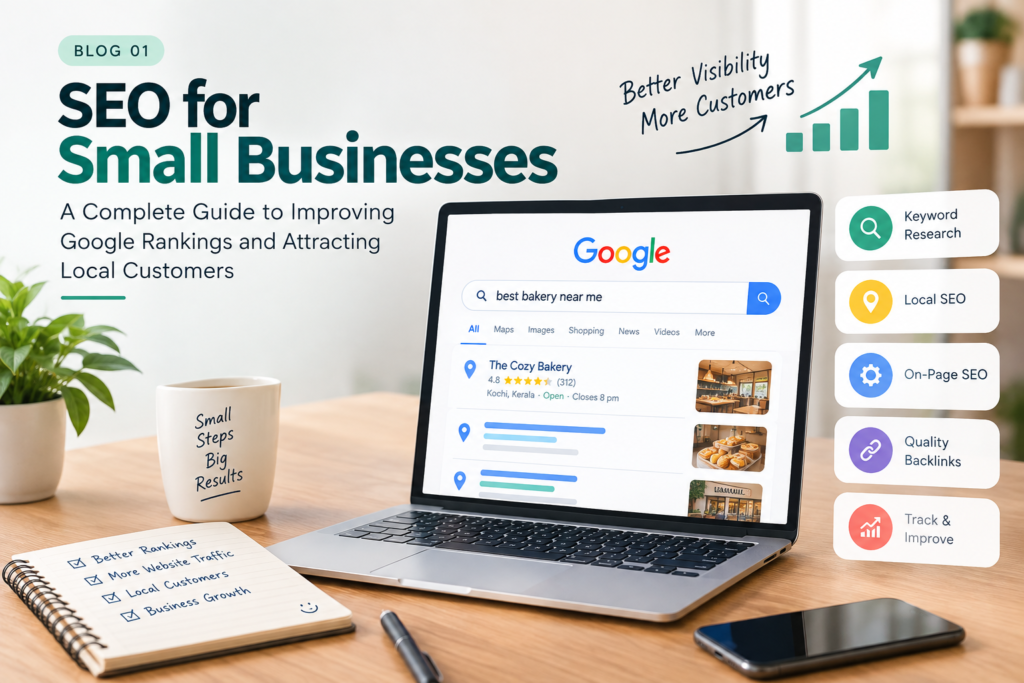
This blog focuses specifically on how small businesses can use SEO to get discovered on Google without depending entirely on paid advertising. Instead of explaining SEO generally, the article can follow the journey of a small business: Customer searches on Google → Business appears in search results → Customer visits website/Google Business Profile → Customer contacts the business → Business gets a lead. What the blog can explain 1. Why SEO matters for small businesses Explain why simply having a website isn’t enough. For example, a business may have a beautiful website, but if potential customers cannot find it on Google, the website may generate very little traffic. Discuss: 2. Understanding search intent Explain that people search Google with different intentions. For example: Informational:“what is digital marketing” Commercial:“best digital marketing agency” Transactional:“digital marketing course near me” Local:“SEO agency in Kochi” Then explain why businesses should create content based on search intent, rather than simply inserting keywords into articles. 3. Finding the right keywords Explain how a small business can identify keywords related to its products/services. Example: Instead of targeting: “digital marketing” A local business might target: “digital marketing agency in Kochi” or: “SEO services for small businesses in Kerala” Discuss: 4. On-page SEO Explain how individual website pages can be optimized. Cover: You can even give a small example of an SEO-friendly webpage structure. 5. Local SEO for small businesses This can be one of the strongest sections. Explain how businesses can improve visibility for searches such as: “salon near me” “best bakery in Kochi” “digital marketing agency in Kerala” Discuss: 6. Creating an SEO content strategy Explain how businesses can use blogs to attract people at different stages of the buying journey. For example, a skincare business could create: Awareness:“Best skincare routine for oily skin” Consideration:“Chemical exfoliation vs physical exfoliation” Decision:“Best chemical peel treatment in Kochi” This demonstrates a much more advanced understanding of content marketing + SEO. 7. Technical SEO basics Keep this section beginner-friendly but professional. Cover: 8. Measuring SEO success Explain what businesses should actually measure. Important metrics: 🔑 Primary SEO keyword SEO for small businesses Secondary keywords